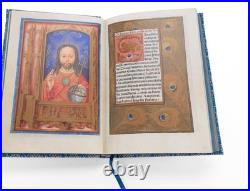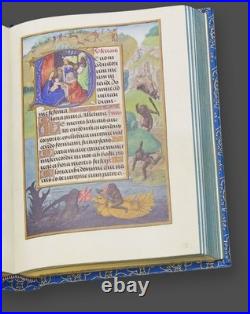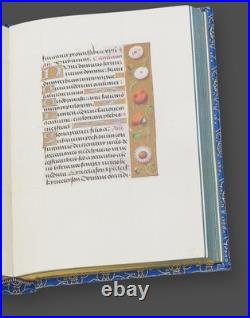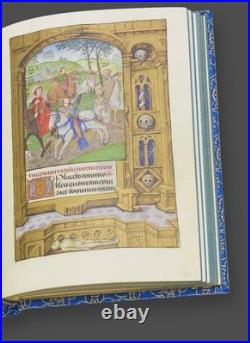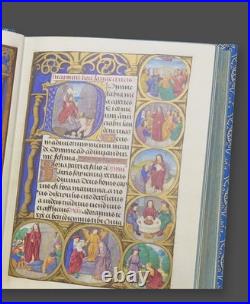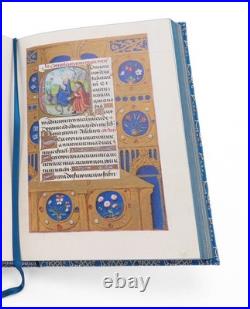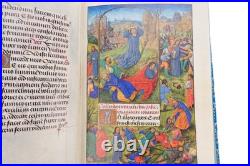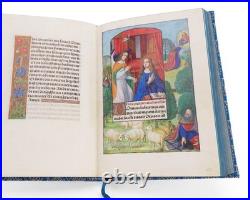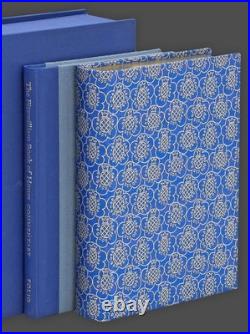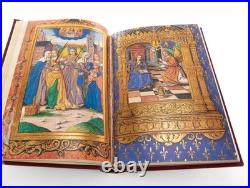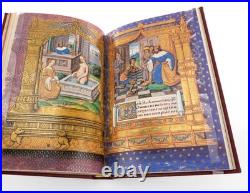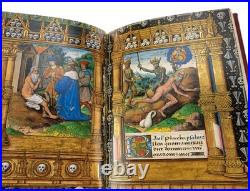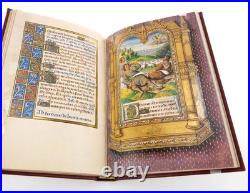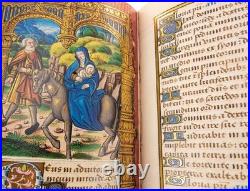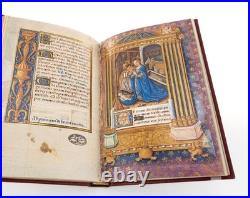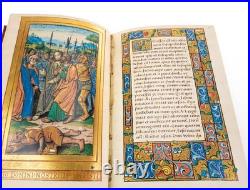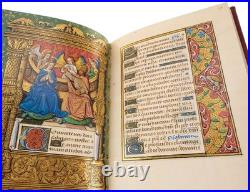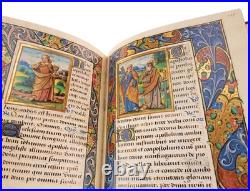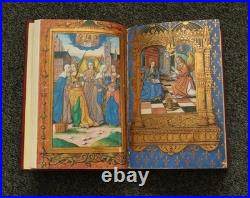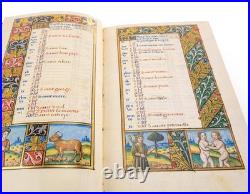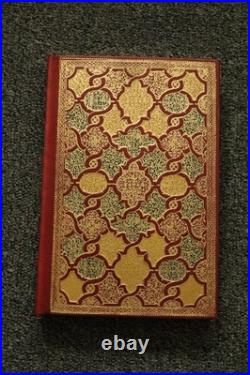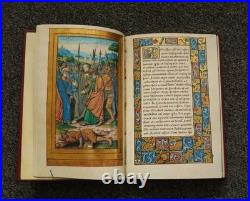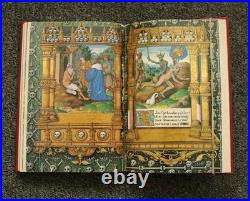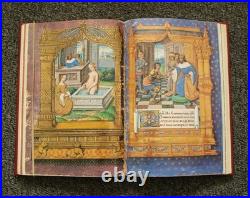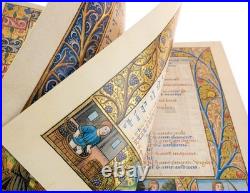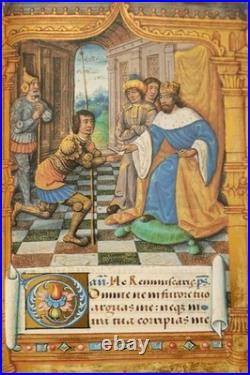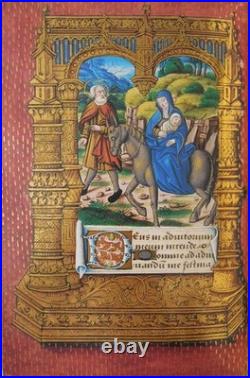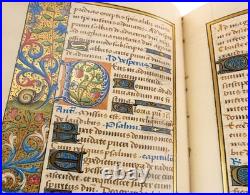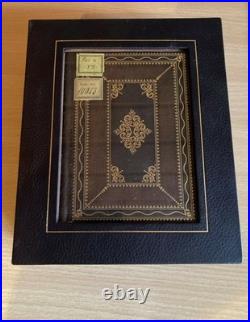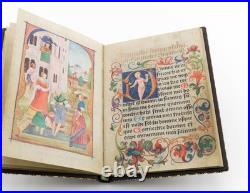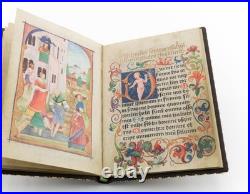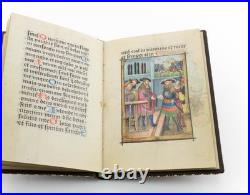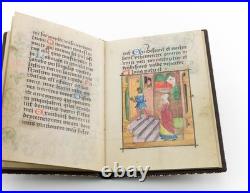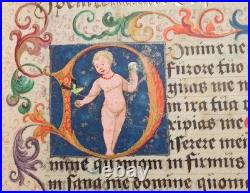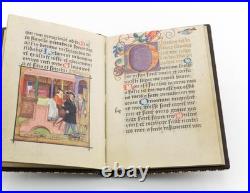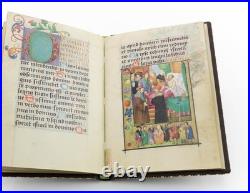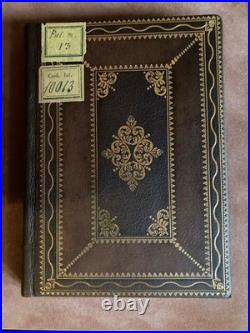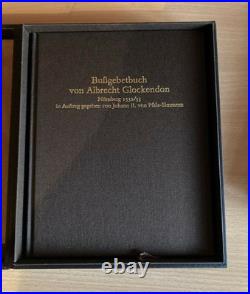
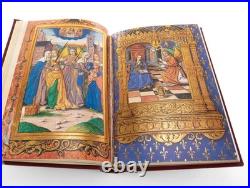
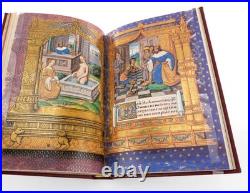
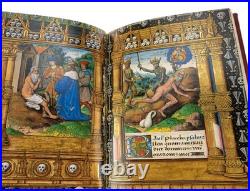
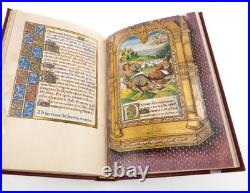
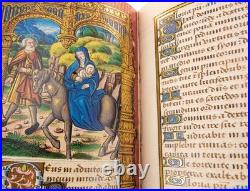
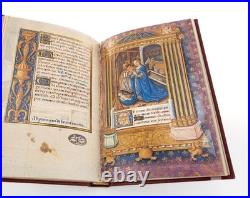
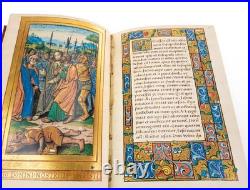
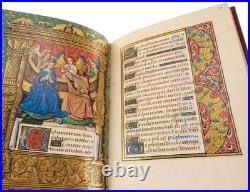
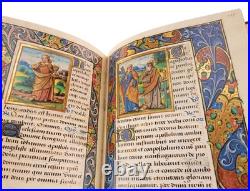
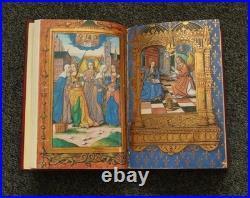
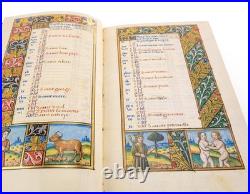


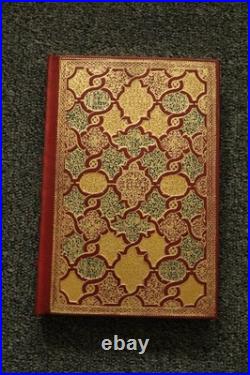

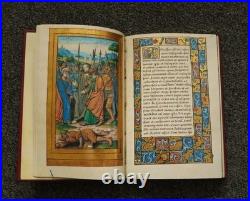
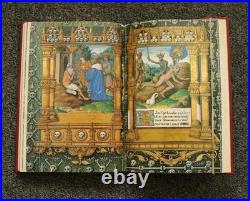
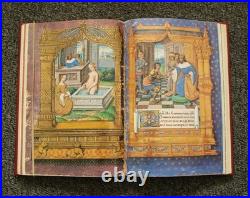

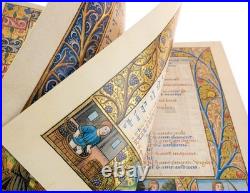
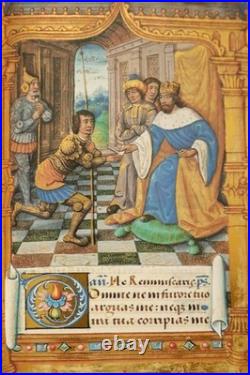
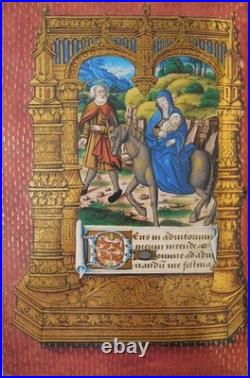
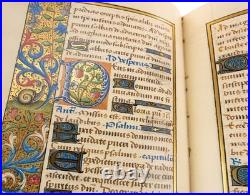

BARBERINI BOOK OF HOURS – LIMITED EDITION FACSIMILE – FINE BINDING. The Barberini Book of Hours for Rouen from 1510, published by Belser Verlag, Zurich, 1994. Full-size color reproduction of the entire original document, manuscript Barb. 487, The Barberini Book of Hours for Rouen: the facsimile attempts to replicate the look-and-feel and physical features of the original document; pages are trimmed according to the original format. Facsimile and commentary (2 volumes). Leather binding with rich cover, spine and back cover ornamentation with gold stamping in a jewelry slipcase; 3-sided gilt edging. 17 full-page and 44 smaller miniatures, excellently executed and richly decorated with raised gold, as well as numerous decorative initials. An overwhelming wealth of motifs and their variations also characterize the 193 wonderful borders. Limited edition: only 1200 copies. This copy is number 358. Condition: As good as new copy. Language of Commentary: German. ABOUT THE ORIGINAL MANUSCRIPT. Made in France around 1510, the Barberini Book of Hours for Rouen is a colorful and multifaceted example of private devotional book decorated in a style between late Gothic and northern Renaissance. Its over 100 parchment folios boast 17 full-page miniatures, 44 illuminated scenes, and almost 200 borders glowing with the most exquisite floral and architectural motifs. The Latin codex, penned in Gothic bastard script, contains a book of hours in the use of Rome and a calendar for Rouen written in French. The illuminators merged old French tradition with new inspiration imported from Italy, as well as Flemish influences, which is visible especially in the borders, so colorful and filled with such intensely depicted flowers that one would think it possible to pick them from the page. All borders are adorned in multiple styles ranging from late Gothic – geometric shapes filled with crosses, hearts, and fleur-de-lis – to Renaissance – architecture elements, fountains, heads. Marvelously decorated initials enriched with gold leaf and outlined in black on intense blue ground mark the beginning of psalms, readings, and prayers. The rubrics, also penned in blue, and the sepia brown text, enhance the folios’ elegance, together with innumerable line-fillers decorated in blue, brown, and burnished gold. Some of the decorated initials are large and feature flower and acanthus motifs. When the library was included in the Vatican Library, the Book of Hours was added to its collection.